
Beyond Moral Outrage: Why the Jimmy Lai Case Requires a Transactional Architecture.
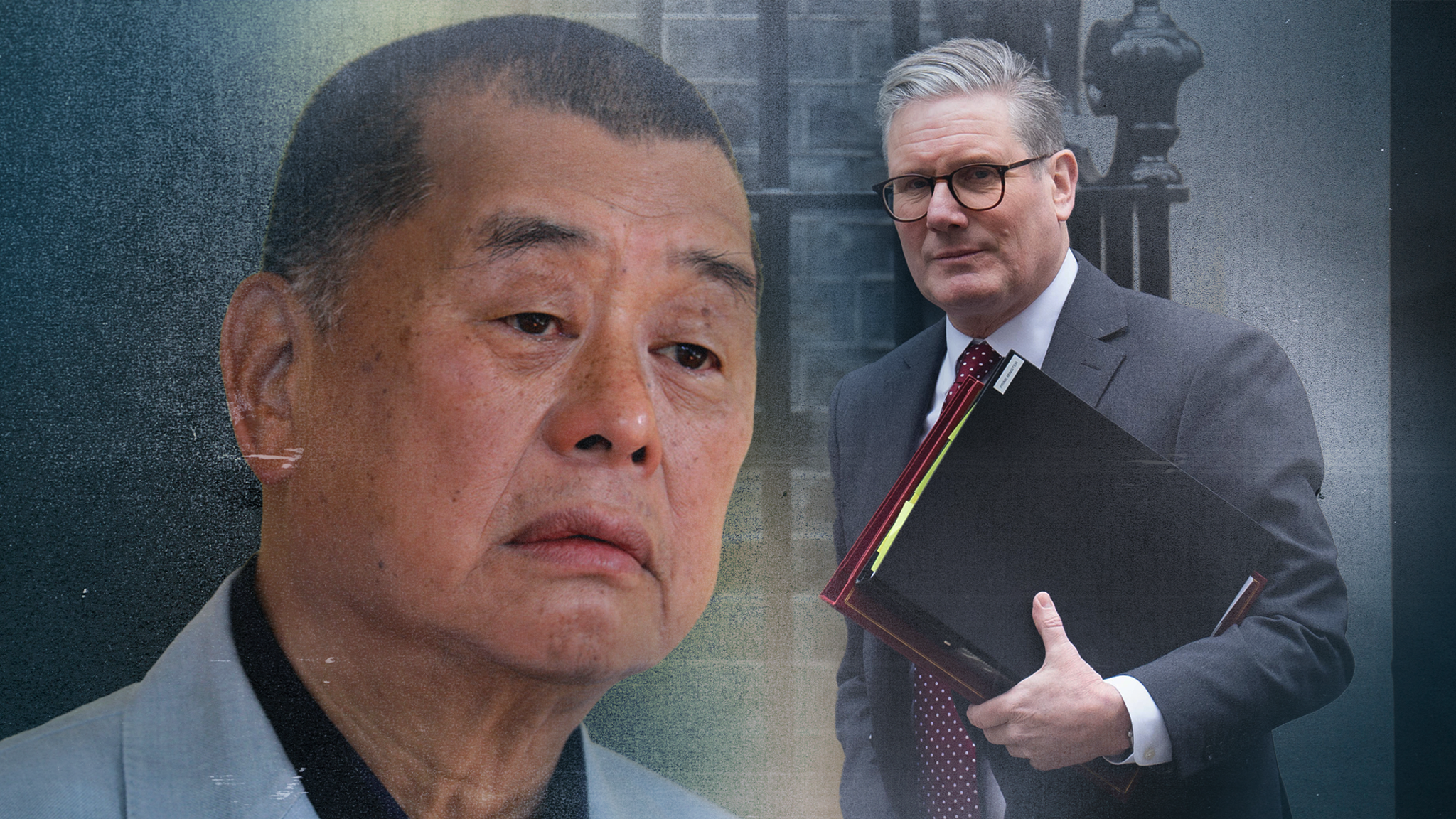
Image from Sky News
As Hong Kong’s High Court is expected to hand down sentence in the Jimmy Lai national security case at 10:00 a.m. Hong Kong time on 9 February 2026, the case enters its final judicial stage. Lai, the founder of Apple Daily, was convicted in December on two counts of conspiracy to collude with foreign forces and one count of conspiracy to publish seditious materials under the National Security Law, with sentencing exposure ranging from lengthy imprisonment to life.
At this point, the question is no longer whether the international community has paid attention. It clearly has. The more consequential question is why years of sustained international advocacy—by governments, parliaments, and civil society—have produced little tangible leverage over outcomes.
For Western governments, the Jimmy Lai case is primarily a human-rights and humanitarian issue.
For Beijing, it is a national-survival issue tied to regime security, sovereign authority, and strategic signaling.
As long as these frames remain misaligned, Western advocacy will continue to generate awareness without generating leverage.
A Framing Asymmetry, Not an Attention Deficit
For Western governments, the Jimmy Lai case is framed primarily as a human-rights and humanitarian issue. It is understood as part of a broader pattern of shrinking civil liberties, press freedom violations, and arbitrary detention. Within this frame, moral condemnation, public statements, parliamentary resolutions, and international advocacy are the natural tools of response.
For Beijing, however, the case is framed in an entirely different register. It is treated as a national security and regime-stability issue, embedded in a larger project of political consolidation and sovereign assertion. Hong Kong, since 2019, has functioned as a testing ground for transforming a politically dissenting society into one aligned with the Chinese Communist Party’s “grand narrative” of national unity and control. Within that experiment, Jimmy Lai has long been portrayed as a central symbol of resistance and foreign interference.
This asymmetry matters because human-rights framing assumes reputational cost can induce restraint, whereas regime-security framing assumes restraint itself creates unacceptable risk. The two logics do not intersect naturally.
Why Western Diplomatic Effort Converts Poorly into Leverage
Western governments have not been idle. The United States Congress and administration, the United Kingdom, Canada, and the G7 have repeatedly raised the case publicly and privately. These actions have helped build awareness, preserve international records, and signal normative opposition. They are meaningful—but they are not coercive.
The limiting factor is not sincerity, but political incentive structure.
In a period of global destabilization, Western governments are operating under intense domestic and economic constraints. Post-Brexit Britain and Canada face growth pressures and trade vulnerabilities, while relations with China increasingly serve as a hedge against deteriorating or uncertain relations with the United States. For elected leaders, prioritizing economic stability and voter-facing performance often carries higher immediate political returns than advocating for the release of political prisoners abroad.
Crucially, urging leniency for a high-profile political prisoner in China offers limited domestic political payoff, while risking disruption to trade, investment, or diplomatic negotiations. As a result, even principled advocacy tends to plateau at the level of expression rather than escalation.
This explains a recurring pattern: strong statements, persistent concern, but limited conversion into leverage.
Why China Has Little Incentive to Grant Leniency
From Beijing’s perspective, the incentive structure runs in the opposite direction.
Following Xi Jinping’s unprecedented third term, the Chinese leadership has focused on consolidating personal authority, purging internal party rivals, and preparing the state—politically, economically, and psychologically—for a potential military confrontation over Taiwan. Within this context, Hong Kong’s transformation serves as both a domestic demonstration and an external signal.
Showing leniency in the Jimmy Lai case would not be interpreted internally as humanitarian restraint, but as weakening the integrity of the Hong Kong transformation model. More broadly, it could be read as diluting the credibility of Beijing’s deterrence narrative toward Taiwan and other contested spaces.
This is why Beijing has consistently framed Lai as a national enemy and equated his activities with foreign interference. After his conviction, the central government’s liaison office described the verdict as a “stern warning” to “anti-China forces.” The court itself characterized Lai as the mastermind, asserting that his intent to undermine Communist Party rule had never changed.
In this frame, the case is not only about national security in the abstract, but about regime credibility and political survival—including, to an extent, Xi Jinping’s personal historical legacy.
The Cost of Inaction: From Domestic Repression to Regional Instability
There is also a broader strategic cost to treating cases like Jimmy Lai’s as isolated humanitarian tragedies rather than systemic warning signals. Allowing Beijing to persecute domestic dissent without meaningful consequence does not merely silence individual voices; it actively consolidates Xi Jinping’s political authority.
Under Xi’s leadership, internal repression and external assertiveness are not separate tracks. The suppression of dissent—whether in Hong Kong, Xinjiang, Tibet, or the mainland—serves a dual purpose: eliminating internal constraints while validating a governance model centered on coercion, discipline, and ideological conformity. Each unchallenged act of repression reinforces the perception, within the Party-state, that power can be centralized without strategic cost.
History suggests that regimes which successfully extinguish internal opposition rarely become more restrained abroad. On the contrary, the removal of domestic friction lowers the political cost of external risk-taking. An unchallenged Chinese Communist Party, confident in its control over society and narrative, is more likely—not less—to project power outward, whether through military posturing, economic coercion, or gray-zone operations across the region.
This is why the Jimmy Lai case cannot be understood solely as a human-rights issue. It is part of a wider feedback loop in which domestic repression strengthens personalist rule, and personalist rule increases the probability of external aggression. The consequences are not confined to Hong Kong; they extend to the Taiwan Strait, the South China Sea, and the broader Indo-Pacific security environment.
In this sense, turning a blind eye to political persecution inside China is not a neutral act. It is a strategic choice that accelerates regional destabilization by reinforcing the very power structures that drive it.
Why a Heavy Sentence Is Highly Probable
Against this backdrop, a severe sentence is not an anomaly but a rational outcome within Beijing’s framing. Several factors reinforce this expectation:
Narrative lock-in: Having branded Lai as a core foreign-interference figure, leniency would undermine the official storyline.
Precedent setting: This is among the first major collusion convictions under the NSL, requiring an example to be set.
Mitigation constraints: Lai pleaded not guilty and, according to local reporting, submitted no personal or family mitigation letters. Prosecutors have also contested the weight of health-based arguments, narrowing humanitarian off-ramps.
Assuming all new terms are served concurrently, the most probable outcome remains a very high finite sentence, with life imprisonment less likely but materially possible.
The Missing Piece: Political Incentives in the West
The failure of Western pressure is therefore not simply moral or diplomatic—it is structural.
Human-rights advocacy toward China lacks a clear mechanism that translates humanitarian outcomes into political wins for Western decision-makers. Without such mechanisms, even committed actors face incentives to prioritize symbolic action over outcome-oriented bargaining.
If this dynamic is not addressed, advocacy will continue to accumulate awareness without altering results.
What Must Change
If the objective is measurable prisoner outcomes—not only moral positioning—then rights advocacy must be integrated with material leverage.
Not abandoned. Integrated.
Link humanitarian asks to economic architecture.
Trade access, supply-chain trust, technology controls, and investment channels should be structured so rights outcomes affect strategic benefits.Offer off-ramp mechanisms that avoid public humiliation dynamics.
In cases like Lai’s, outcomes are more likely through quiet sentence engineering, medical or procedural pathways, and calibrated legal mechanisms than through public pardon theater.Shift from symbolic pressure to conditional bargaining design.
Governments should move from “raise concerns” diplomacy to explicit consequence-and-benefit frameworks tied to verifiable benchmarks.Expand from one case to a detention portfolio approach.
Lai matters enormously, but sustainable policy must address the broader population of political detainees in Hong Kong and mainland China, including persecuted ethnic communities.
Such approaches reduce political risk for all parties while increasing the probability of measurable outcomes.
In an increasingly multipolar world—where attention is fragmented and crises are constant—human rights will not advance on moral force alone. They advance when political systems are designed to reward those who deliver them.
The Jimmy Lai case lays bare this reality. Until incentive architecture changes, framing asymmetry will continue to define outcomes—and heavy sentences will remain not just possible, but predictable.
The Strategic Reality
The West is fighting in the language of values.
Beijing is operating in the language of regime continuity.
Values without leverage become commentary.
Leverage without strategy becomes noise.
If democratic governments want outcomes, they must stop assuming that moral salience automatically translates into bargaining power. In this case, it does not. The Jimmy Lai case demonstrates a harder truth of the current order: when one side treats an issue as human rights and the other treats it as political survival, the side with the survival frame will dominate—unless the other side attaches real strategic cost to non-compliance and real strategic benefit to de-escalation.
That is the threshold policy has not yet crossed.
